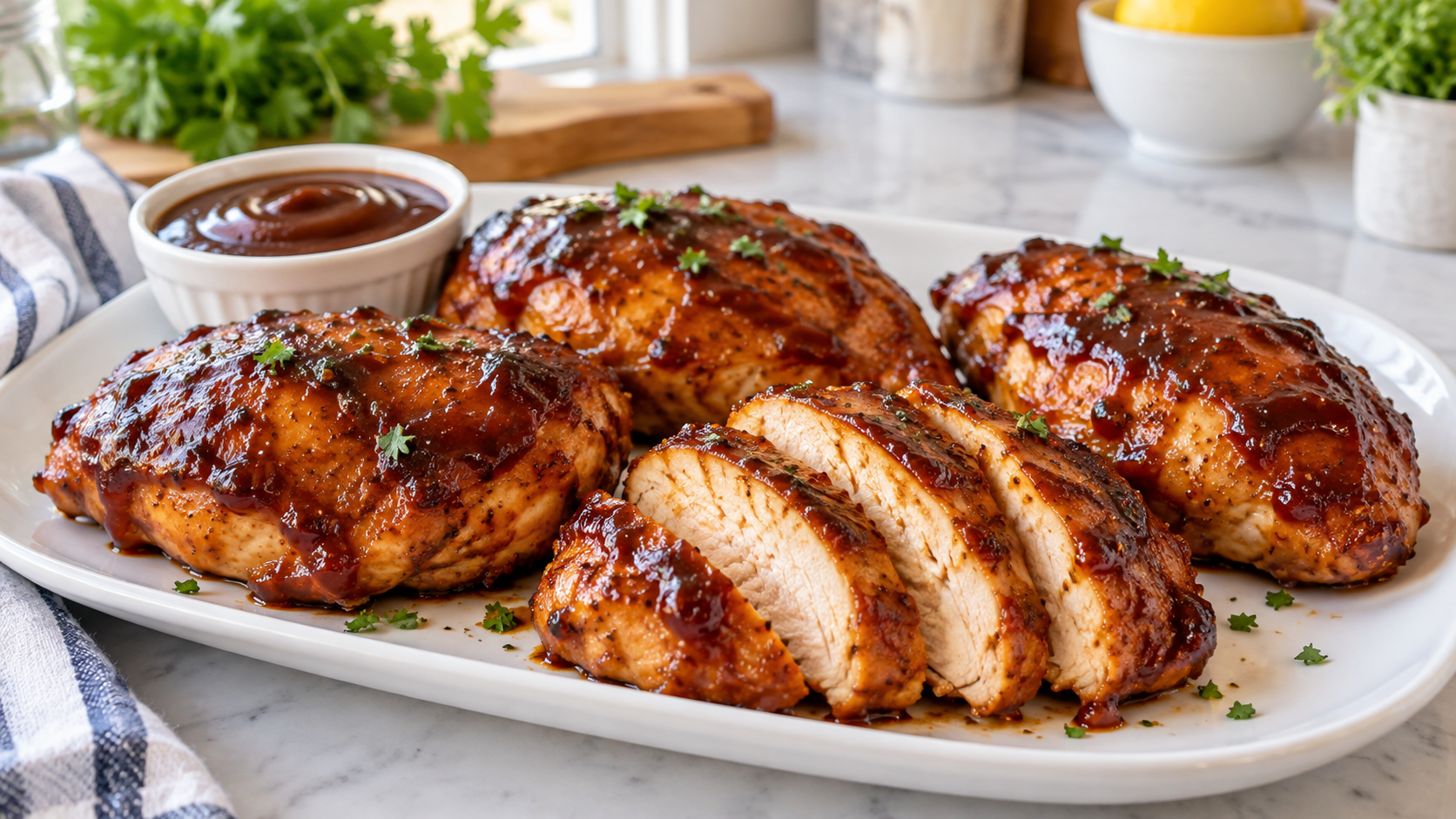
Oven BBQ chicken breast can be juicy, deeply seasoned, and coated in a glossy layer of barbecue sauce without turning dry or scorched. The trick is simple: give the chicken a head start in the oven, then add most of the sauce near the end so it has time to cling and caramelize without burning.
This is the kind of chicken dinner that earns its place in the regular rotation because the method is easy to remember and the ingredient list stays short. You get smoky seasoning underneath the sauce, plenty of barbecue flavor on top, and a breast that slices cleanly without feeling tough. The biggest variables are thickness and temperature, not complicated technique, so an instant-read thermometer does far more for this recipe than extra ingredients ever could.
Use a thick barbecue sauce you already like, make the chicken pieces as even as you reasonably can, and let the oven do the rest. In about 35 minutes, dinner is ready for potatoes, corn, slaw, rice, salad, sandwiches, or whatever else is on the table.
The Heart of This Oven BBQ Chicken Breast
Barbecue chicken does not need a grill to have good flavor. The oven gives you steady heat, the smoked paprika adds a gentle smoky note, and the sauce supplies the sweet, tangy finish people expect from barbecue chicken. The result feels familiar in the best way, but the method is controlled enough to make it dependable on a weeknight.
The sauce timing is what makes this version especially useful. Brushing sugary barbecue sauce over raw chicken before it goes into a hot oven can leave the edges much darker than the center needs. Starting with the dry seasoning lets the chicken cook first, then the sauce goes on when there is just enough time left for it to thicken and grab onto the surface.
Chicken breast also benefits from a little attention to shape. A breast with one very thick end and one thin end is trying to cook two different dinners at once. Gently evening out that thick end means the thinner side has a better chance of staying tender while the center reaches a safe temperature.
What Makes This Dish Work
Boneless, skinless chicken breasts keep the recipe fast and easy to portion. Six-ounce pieces are a useful target, but thickness matters more than the number on the package. If the thick end looks dramatically taller than the thin end, a few gentle taps with a meat mallet or rolling pin will make the cooking more even.
Olive oil gives the dry seasonings something to hold onto and helps the chicken surface stay supple in the hot oven. You only need a small amount. The goal is a light coating, not a pool of oil in the pan.
Smoked paprika, garlic powder, onion powder, salt, and black pepper create a savory layer underneath the barbecue sauce. Smoked paprika is doing two jobs here: it adds color and gives the chicken a hint of smoke without making the seasoning taste heavy.
The barbecue sauce is the final flavor layer, so use one you enjoy eating on its own. A thick sauce works especially well because it stays on the chicken instead of running immediately into the pan. Sweet sauces darken faster than thinner, vinegar-forward sauces, which is another reason to apply most of it near the end.
- No smoked paprika? Use regular paprika. The chicken will be less smoky but still well seasoned.
- Want more heat? Add a pinch of cayenne or chipotle powder to the dry seasoning.
- Using a very sweet sauce? Watch the glaze closely during the final minutes because high-sugar sauces brown quickly.
- Using larger chicken breasts? Keep the same temperature, but expect a longer cook and rely on the thermometer rather than the clock.
How to Make Oven BBQ Chicken Breast
Get the Chicken Ready for Even Cooking
Heat the oven to 400°F and line a rimmed baking sheet, or lightly grease a baking dish. Pat the chicken dry with paper towels. You want the surface to feel dry rather than slick, because that helps the oil and seasoning stay where you put them.
Look at each breast from the side. If one end is much thicker, cover the chicken loosely with parchment or plastic wrap and tap only the thick portion until it is closer to about 3/4 inch. You are not trying to flatten the whole breast into a cutlet; you are just reducing the biggest difference in thickness.
Season Before the Sauce
Rub the chicken lightly with olive oil. Stir the smoked paprika, garlic powder, onion powder, salt, and pepper together in a small bowl, then season both sides. The surface should look evenly rusty-red from the paprika with no large bare patches.
Arrange the breasts in a single layer with a little space around each piece. Bake for 15 minutes before adding the sauce. At this point the chicken will look partly cooked and pale in the center, and the seasoning should smell warm and savory.
Build the Sticky Barbecue Glaze
Brush about 1/2 cup of barbecue sauce over the tops and sides. You want a full coating, but not so much that the chicken is swimming in sauce. Return the pan to the oven for 5 to 10 minutes.
Start checking the largest breast at the early end of that range. Insert an instant-read thermometer into the thickest part without pushing the tip all the way through to the pan. The chicken is ready when that thickest section reaches 165°F.
Finish, Rest, and Slice
Brush the hot chicken with the remaining sauce as soon as it comes out of the oven. That fresh layer gives you a bright barbecue flavor on top of the cooked glaze. Let the chicken rest for 5 minutes before cutting into it.
When you slice, cut across the grain if you can see the direction of the muscle fibers. The interior should be opaque and moist, and the slices should hold their shape without shredding or looking chalky.
What to Serve with That Sticky Barbecue Glaze
This chicken is bold enough to anchor a plate, so the best sides either cool it down, add freshness, or give you something creamy to catch the extra sauce. Coleslaw works because the crunch and acidity cut through a sweet glaze. Corn on the cob, roasted green beans, baked beans, or a crisp garden salad all sit comfortably beside it without competing.
For a heartier dinner, add mashed potatoes, macaroni and cheese, roasted potato wedges, or rice. The sauce turns into a built-in seasoning for those plainer sides. If the barbecue sauce leans smoky and spicy, a cold cucumber salad or simple ranch-dressed greens make a nice contrast.
Lemonade and iced tea fit naturally with this kind of meal. For dessert, something simple and fruit-forward such as peach cobbler, berry crisp, or fresh watermelon keeps the menu balanced. The recipe is casual enough for a weeknight, but it also scales well for a backyard-style dinner where you want the barbecue flavor without managing a grill.
Easy Variations
Spicy BBQ Chicken Breast
Add 1/8 to 1/4 teaspoon cayenne to the dry seasoning, or stir a little hot sauce into the barbecue sauce. This works best when the base sauce is sweet enough to balance the extra heat.
Honey BBQ Chicken Breast
Use a honey-style barbecue sauce, or stir a teaspoon or two of honey into a tangier sauce. Because extra sugar browns fast, keep an eye on the chicken during the last few minutes.
Smokier Oven BBQ Chicken
Increase the smoked paprika to 1 1/2 teaspoons and add a small pinch of chipotle powder. It will not taste exactly like live-fire barbecue, but the flavor moves in that direction without needing liquid smoke.
Mustard BBQ Chicken Breast
Choose a mustard-based barbecue sauce for a sharper, less sweet finish. The dry seasoning can stay exactly the same, so this variation requires no change to the cooking method.
Cheesy BBQ Chicken
During the final 2 to 3 minutes, sprinkle a small amount of shredded cheddar or Monterey Jack over the sauced chicken. Use a light hand so the cheese supports the barbecue flavor instead of covering it.
Storage, Reheating & Make-Ahead Tips
Cool leftover chicken promptly and refrigerate it in an airtight container for 3 to 4 days. Keep a spoonful of extra barbecue sauce with it if you can; that extra moisture is useful when reheating because lean chicken breast dries out more easily the second time around.
For the oven, place the chicken in a small baking dish, add a spoonful of sauce or water, cover loosely with foil, and warm at 325°F until heated through. For a single serving, the microwave is faster: cover the chicken and heat in short intervals so you can stop as soon as it is hot. Reheated leftovers should reach 165°F.
You can season the raw chicken up to a day ahead and keep it covered in the refrigerator. Wait to add the barbecue sauce until baking time. Cooked BBQ chicken breast can also be frozen for up to about 3 months; wrap portions well, thaw overnight in the refrigerator, and reheat gently with extra sauce.
Ways to Use Leftover Oven BBQ Chicken Breast
BBQ Chicken Sandwiches
Slice or chop the cold chicken, warm it with a little extra sauce, and pile it onto toasted buns. Add slaw for crunch and acidity, or keep it simple with pickles and thin-sliced onion.
BBQ Chicken Flatbread
Scatter chopped chicken over flatbread with a thin layer of barbecue sauce, red onion, and mozzarella or cheddar. Bake just until the cheese melts and the edges crisp.
BBQ Chicken Grain Bowls
Serve sliced chicken over rice or another grain with corn, black beans, greens, and a spoonful of slaw. A little ranch or lime dressing gives the bowl a cooler note against the sweet sauce.
BBQ Chicken Salad
Chop the chicken and add it to crisp lettuce with tomatoes, corn, cucumber, and shredded cheese. Use ranch, a light vinaigrette, or even a small drizzle of barbecue sauce mixed into the dressing.
BBQ Chicken Quesadillas
Combine chopped chicken with shredded cheese between tortillas and cook until the outside is crisp and the filling is hot. The barbecue sauce gives the filling enough flavor that you do not need many extra ingredients.
Oven BBQ Chicken Breast
Ingredients
Equipment
Method
- Preheat the oven to 400°F. Line a rimmed baking sheet with foil or parchment, or lightly grease a 9x13-inch baking dish.
- Pat the chicken breasts dry. If one end is much thicker than the other, gently pound the thick end until the breasts are close to an even 3/4-inch thickness.
- Rub the chicken with the olive oil. Mix the smoked paprika, garlic powder, onion powder, salt, and black pepper, then season the chicken evenly on both sides.
- Arrange the chicken in a single layer with a little space between the pieces. Bake for 15 minutes.
- Brush the tops and sides with about 1/2 cup of the barbecue sauce. Return the chicken to the oven for 5 to 10 minutes, checking the thickest piece with an instant-read thermometer. The chicken is done when the thickest part reaches 165°F.
- Brush the hot chicken with the remaining 1/4 cup barbecue sauce. Rest for 5 minutes before slicing so the juices settle back into the meat.
Nutrition
Notes
Writer's Notes
- Even thickness matters more than exact weight. Pound only the thick end so the chicken cooks at roughly the same rate from edge to center.
- Pat the chicken dry before adding oil and seasoning. A dry surface helps the seasoning cling instead of sliding around the pan.
- Add most of the barbecue sauce during the last 5 to 10 minutes. Many sauces contain sugar, which can darken too quickly if it bakes for the entire cooking time.
- Check temperature in the thickest part of the largest breast. Stop cooking when it reaches 165°F rather than relying only on the clock.
- Let the chicken rest for 5 minutes before slicing. Cutting immediately lets more of the hot juices run onto the plate instead of staying in the meat.
Tried this recipe?
Let us know how it was!Questions About Oven BBQ Chicken Breast
What temperature should I bake BBQ chicken breast at?
400°F is a practical temperature for boneless, skinless breasts because it cooks them efficiently while still giving the sauce time to thicken near the end. The exact time depends on thickness, so use 165°F in the thickest part as the real finish line.
How long does it take to bake chicken breast at 400?
Evenly thick boneless breasts around 6 ounces often need roughly 20 to 25 minutes total, but larger or thicker pieces can take longer. Start checking early with an instant-read thermometer rather than extending the time automatically.
Should I cover BBQ chicken breast while it bakes?
For this method, leave it uncovered so the surface can roast instead of steam and the sauce can turn glossy. If the sauce becomes very dark before the center reaches 165°F, loosely tent the pan with foil only for the final few minutes.
When should I put barbecue sauce on chicken?
For oven-baked boneless breasts, adding most of the sauce during the final 5 to 10 minutes gives it time to set without exposing the sugar to high heat for the entire cook. A final brush after baking adds fresh sauce flavor and shine.
How do I keep BBQ chicken from drying out in the oven?
Even out the thick end of each breast, bake at a steady temperature, and stop cooking as soon as the thickest part reaches 165°F. Resting for 5 minutes before slicing also helps the juices stay in the chicken instead of spilling onto the cutting board.
Can you put BBQ sauce on raw chicken?
You can, but it is not always the best choice for a hot oven because many barbecue sauces contain enough sugar to darken before a thick chicken breast finishes cooking. Seasoning first and saucing later gives you more control over both doneness and browning.
How do you know when chicken breast is done?
Use a food thermometer in the thickest part of the breast and cook until it reaches 165°F. Color alone is not a reliable doneness test, especially once the chicken is covered with dark barbecue sauce.
A Simple Chicken Dinner Worth Repeating
Oven BBQ chicken breast works because the method solves the two things that usually cause trouble: uneven thickness and sauce that spends too long in the heat. Once those are handled, the rest is straightforward. Season the chicken well, let it bake before the glaze goes on, and use temperature rather than guesswork to know when it is ready.
That gives you a useful main dish with a juicy center, smoky seasoning, and enough sticky barbecue flavor to carry a whole plate. Keep the base recipe as written the first time, then adjust the heat level, sauce style, or sides to fit what you have. Thanks for cooking along, and when you make it, come back and share how you served it.